

Construction
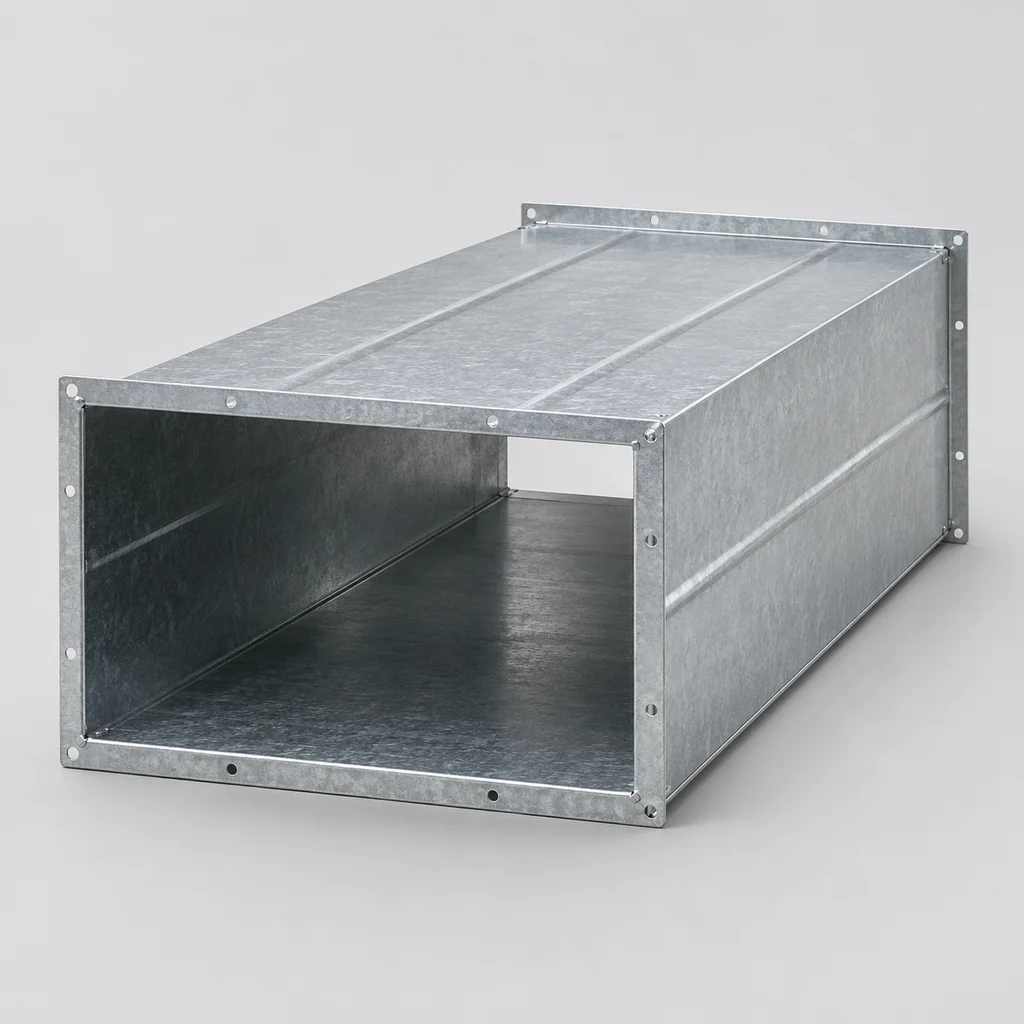
The welded longitudinal seam closes the component body. The transverse joint connects modules and may use TDC-S, angle iron or flat bar, according to the supply drawing. Welding and flanging are complementary decisions.
Applications
Ventilation and exhaust applications that specify welded construction. Pressurization and extraction of smoke, grease or particles have their own design requirements; “welded” does not demonstrate fire resistance or suitability for every process.
Material suited to the operating conditions
Aluminum: define the alloy and welding procedure. Galvanized steel: provide for preparation and restoration of heat-affected protection. Stainless steel: specify alloy, finish and weld cleaning. Carbon steel: define surface protection where required.
Joints between modules
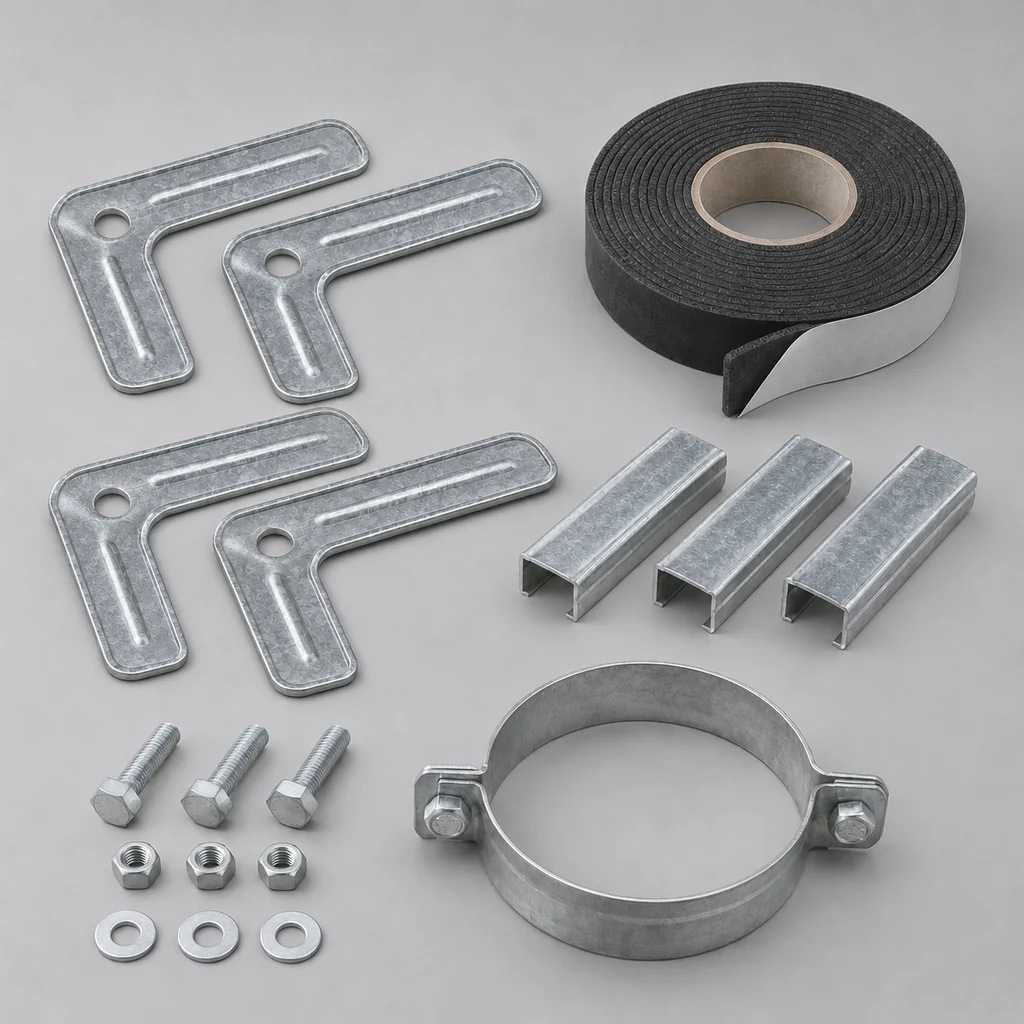
TDC-S can form the flange in the sheet itself. Angle iron and flat bar serve other interfaces, according to required dimensions, hole patterns and rigidity. The connection drawing must specify fasteners and sealing.
Welding and inspection
The MIG/MAG process is selected according to the material and manufacturing procedure. The specification must establish weld continuity, finish, tolerances and inspection criteria. Additional testing requirements must be defined in the supply scope.
Verifiable airtightness
A welded body does not eliminate joints between modules, covers and inspection doors. If leakage testing is required, specify pressure, sections, assessed area and acceptance limit. Thickness, reinforcement and module length are defined for each project.

 Direct WhatsApp contact